Root Canal Treatment
Microscopic Root canal is done with Leica microscope. This microscope is first of its kind in India owned by an Endodontist.
Leica is the top brand in dental microscope highly preferred by Endodontist in the USA and European nations.
Statistics:
Conventional RCT success rate is 50-60%.
Microscopic RCT of all cases success rate is 90%.
For this service warranty is 15-20 years depending upon cases.
We are giving Root Canal Treatment to:
1. Pediatric
2. Adult
3. Geriatric
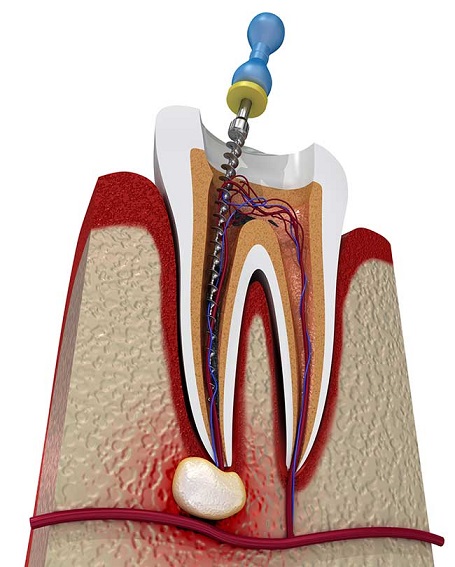
Though there are many treatments available to help patients to preserve their infected and decayed teeth, but the most advanced and painless treatment to treat infected teeth is Painless Root Canal Treatment. Painless RCT is procedure that is mainly executed by dentists to remove the pulp tissues from the decayed or infected teeth. This treatment procedure is very effective and painless. This treatment is like a boon for dental patients because previously there was no option left for patients with decayed or infected teeth rather than removing it. After the advent on painless RCT now patients can treat their infected teeth without removing them.
Who need this treatment?
Patients with throbbing pain in their tooth, especially during night while sleeping
Patients having sensation while having cold or hot drinks or food
Patients with swelling in their jaw bone or around the gums.
Why Painless RCT is required?
When infected or decayed tooth is left untreated, then the infection may spread into the tooth which may further infect the pulp. If the pulp of the patient becomes infected, then it starts degenerating. Like all other infection, there is a formation of pus at the tip of the roots within your jawbone, which is known as abscess. So, the patients will experience severe pain and swelling because of this abscess which may further affect the jawbone as well. So, painless RCT is quite essential to treat the condition
Procedure
Root canal treatment is performed under local anesthesia to ensure a comfortable and pain-free experience.
1. Accessing the Infected Tooth
The dentist creates a small opening in the tooth to reach the infected pulp.
2. Removal of Infected Pulp
The diseased pulp tissue is carefully removed, and the root canals are cleaned and shaped.
3. Disinfection of Root Canals
The canals are thoroughly disinfected using saline and specialized medical solutions to eliminate bacteria.
4. Filling and Sealing
The cleaned canals are filled with a biocompatible material and sealed to prevent future infection.
5. Crown Placement
After the root canal procedure, the treated tooth is protected with a dental crown to restore strength and prevent fractures. Timely crown placement is essential, as untreated teeth may become brittle and prone to breaking.
_ZHmyuCj.jpg)
