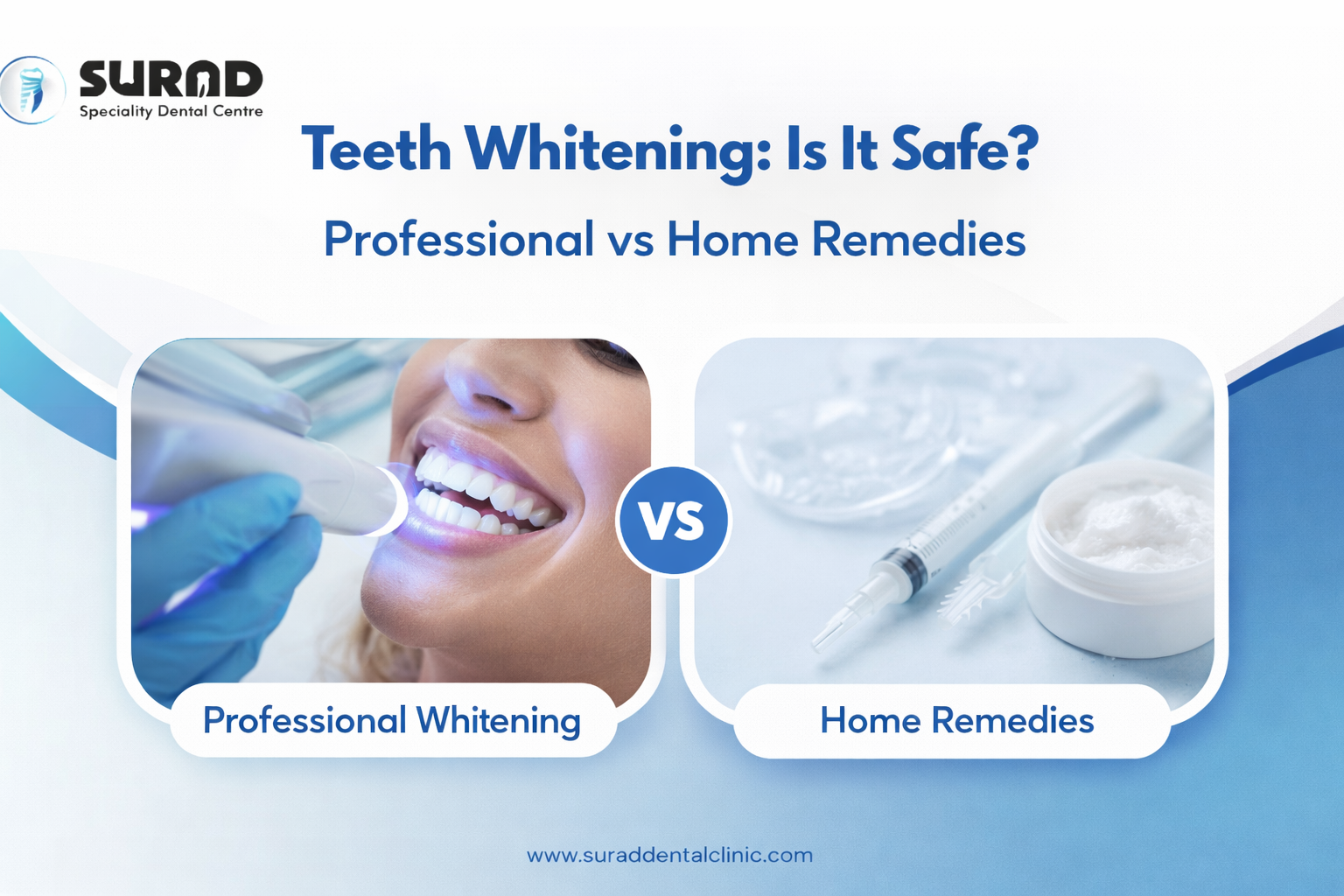
Teeth Whitening: Is It Safe? Professional vs Home Remedies
A white smile is often linked with confidence, which is why so many people today look for a teeth whitening dentist or search online for ways to brighten their teeth. From professional clinic treatments to trending teeth whitening home remedies, there’s no shortage of options promising quick results.
But this also leads to confusion. Patients often wonder if teeth whitening is safe, and whether they should choose professional teeth whitening or try to whiten teeth at home using DIY solutions. While some stains can improve with simple care, others need expert treatment to avoid sensitivity or damage.
Before choosing any method, it’s important to understand what actually causes tooth discoloration and which approach works best for your situation. In this guide, we’ll break down the difference between dental treatments and home teeth whitening remedies, so you can make a safe and informed decision for your smile.
What Is Teeth Whitening & How Does It Work?
Teeth whitening is a dental treatment that helps remove stains and lighten the natural shade of your teeth. It doesn’t damage your teeth when done correctly, instead, it works by breaking down stain particles so they become less visible.
Most whitening treatments use safe bleaching agents that penetrate the enamel and lift deep stains caused by food, smoking, or aging. Some stains sit on the surface and are easier to remove, while others go deeper and need professional treatment.
This is why results from a teeth whitening dentist are usually more noticeable than home remedies. A dentist can choose the right method based on your tooth condition, sensitivity level, and type of discoloration.
Is Teeth Whitening Safe?
One of the most common questions patients ask is: is teeth whitening safe?
The short answer is yes, when it’s done properly and under professional guidance.
Dental whitening treatments approved by dentists are designed to protect your enamel and gums. Mild sensitivity can happen temporarily, but it usually fades within a few days. Problems mostly occur when people overuse whitening products, try harsh home remedies, or use kits without understanding their teeth condition.
That’s why consulting a dental professional before whitening is important. A dentist can check for cavities, gum issues, or enamel damage and recommend the safest option for you. Clinics like Surad Speciality Dental Centre evaluate your oral health first, ensuring whitening is both safe and effective for your smile.
Types of Teeth Whitening Methods Available
There are three main ways to brighten your smile:
4.1 Professional Teeth Whitening
Performed in the dental clinic
Uses stronger, safe bleaching agents
Quick and noticeable results
Dentist monitors for sensitivity and safety
4.2 At-Home Whitening Kits
Over-the-counter gels, strips, or trays
Weaker bleaching agents, slower results
Can be convenient but may cause uneven whitening
4.3 Natural / DIY Home Teeth Whitening Remedies
Baking soda, activated charcoal, oil pulling, etc.
Mild results, mostly surface stains
Safe only when done correctly; overuse can harm enamel
Professional Teeth Whitening: Benefits & Risks
Benefits:
Brighter results in a single session
Custom treatment for your teeth
Longer-lasting than most home remedies
Safer for sensitive teeth when supervised
Risks:
May be temporary sensitivity
Professional whitening is ideal if you want a fast, noticeable change and want the reassurance of a dentist monitoring your treatment.
At-Home Whitening Products: Do They Really Work?
Many people search “how to whiten teeth at home” hoping to get quick results. Over-the-counter products and home remedies can help with surface stains and mild discoloration.
Tips for safety:
Follow instructions carefully
Avoid overuse of bleaching strips or gels
Stop if you experience persistent sensitivity
While home remedies are convenient, professional guidance ensures the best balance of safety and results.
Natural Ways to Whiten Teeth: Myth vs Reality
Popular home remedies include baking soda, activated charcoal, oil pulling, or apple cider vinegar. While they may slightly lighten surface stains, they are not as effective as professional teeth whitening. Overuse of these methods can sometimes wear down enamel and cause sensitivity.
The safest approach is to combine good oral hygiene with dentist-recommended treatments, rather than relying solely on DIY solutions.
Teeth Whitening Side Effects You Should Know
Temporary tooth sensitivity
Gum irritation (from improper application)
Uneven whitening with DIY remedies
Enamel damage if overused
Using whitening treatments under dentist supervision minimizes these risks.
How Long Does Teeth Whitening Last?
Professional whitening: 1–3 years depending on diet, smoking, and oral care
At-home kits: A few months, slower improvement
Natural remedies: Minimal, often temporary results
Regular check-ups and good oral hygiene can help maintain a bright smile longer.
When Should You See a Dentist for Whitening?
Severe or stubborn stains
Tooth sensitivity issues
Uneven whitening
Pre-existing dental problems
Consulting a teeth whitening dentist ensures your treatment is safe and effective.
Conclusion
Choosing between professional teeth whitening and home teeth whitening remedies depends on your goals, budget, and tooth sensitivity. Professional treatments are faster, safer, and more reliable, while home remedies can help maintain or mildly improve your smile.
If you’re unsure which method is right, the best step is to consult a Surad Speciality Dental Centre dentist. Early guidance ensures you get a brighter smile safely, at very affordable prices.
Book your teeth whitening consultation today and discover the safest, most effective way to brighten your smile!