Biomimetic Dentistry: Preserving More of Your Natural Tooth
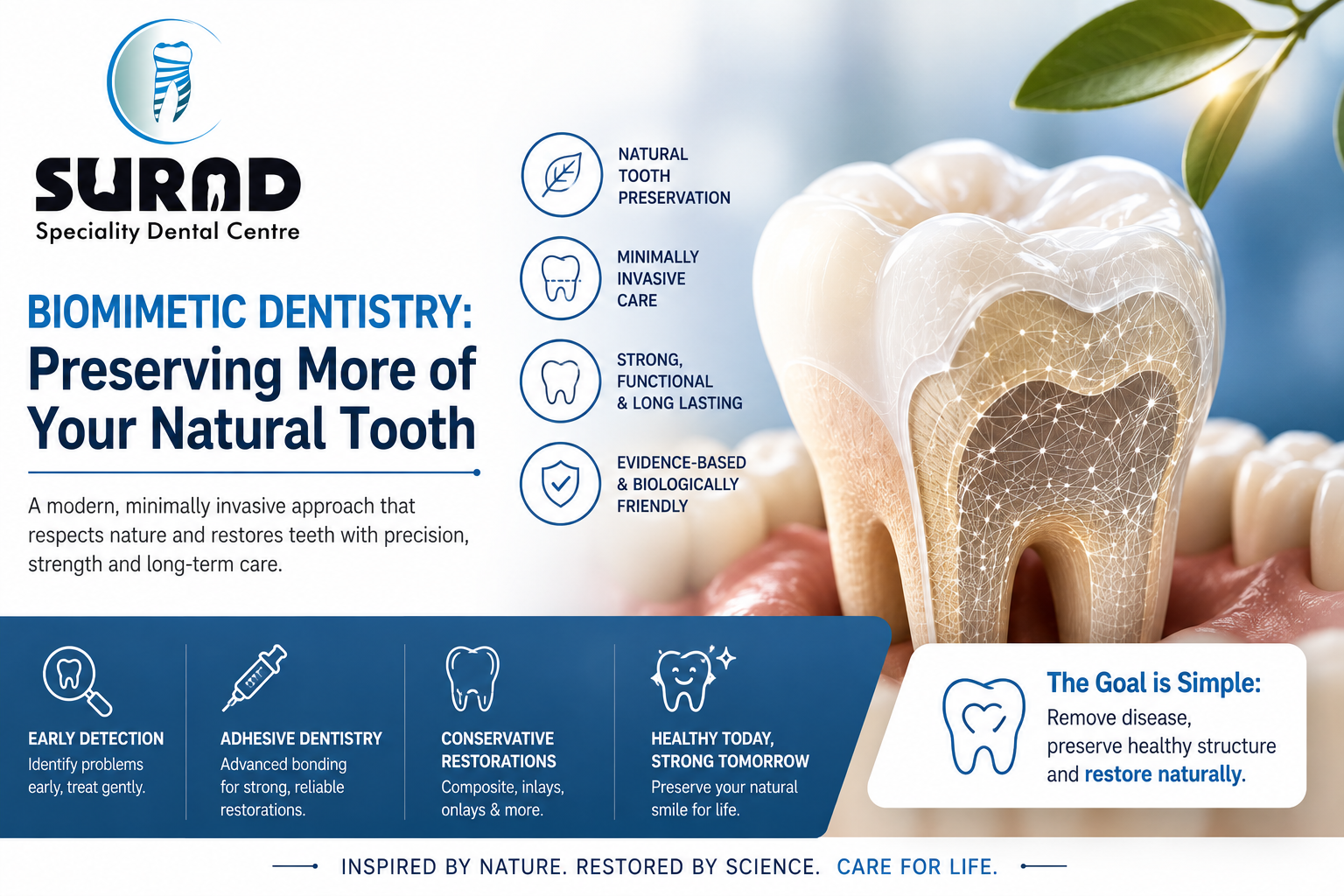
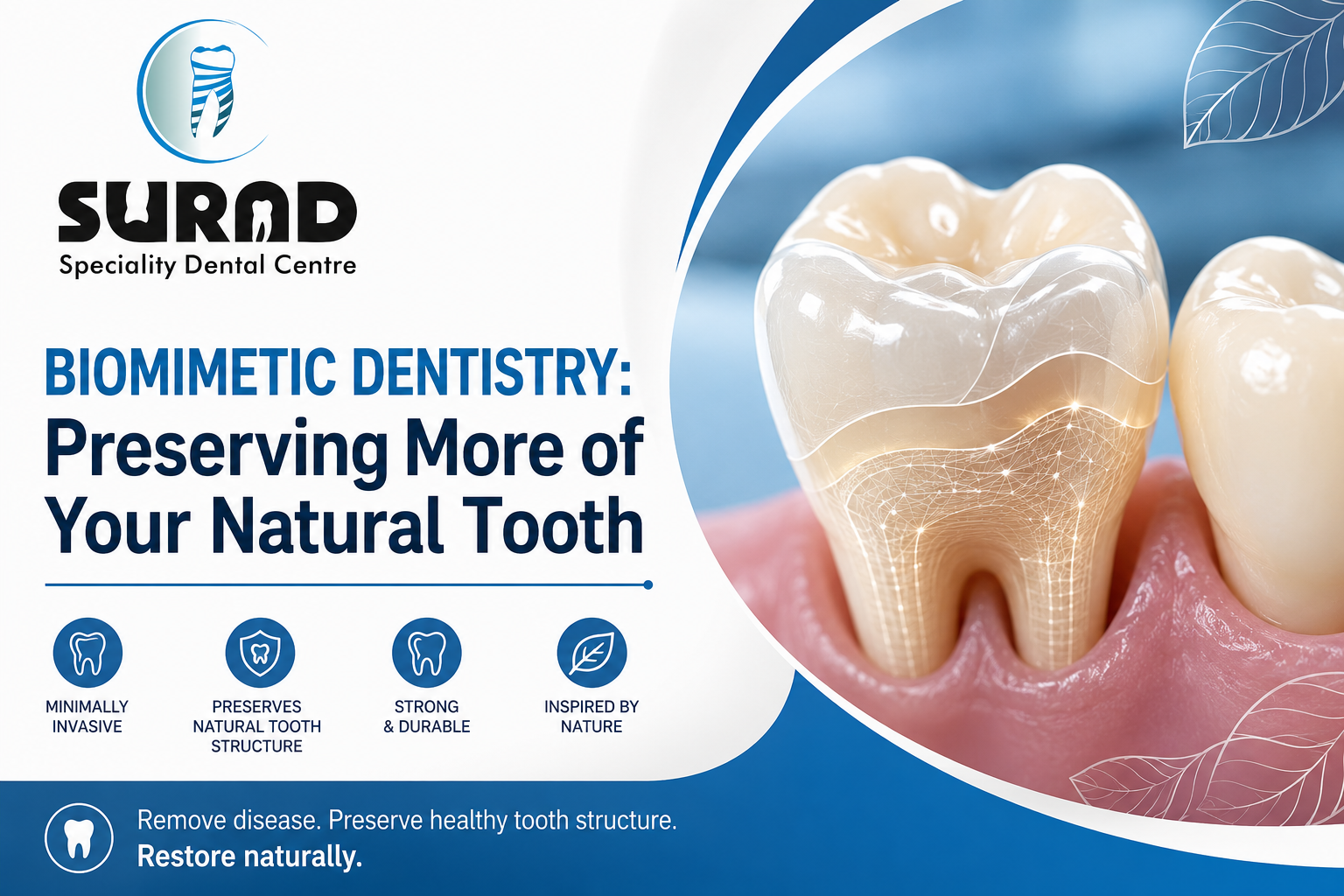
Biomimetic dentistry is a modern approach to restorative dentistry that aims to repair damaged teeth while preserving as much healthy natural tooth structure as possible. The word "biomimetic" means imitating nature, and this philosophy focuses on respecting the natural tooth's structure, strength, function and biology.
A Minimally Invasive Approach
Unlike traditional approaches that may require extensive tooth preparation, biomimetic dentistry emphasizes minimally invasive dentistry, early diagnosis and conservative treatment. Depending on the condition of the tooth, treatment may include tooth-coloured composite restorations, adhesive restorations, inlays, onlays or other partial-coverage restorations.
The Role of Adhesive Dentistry
One of the key principles is adhesive dentistry. Modern bonding systems allow restorative materials to adhere to enamel and dentin, helping dentists restore damaged areas while minimizing unnecessary removal of healthy tooth structure. Proper isolation, careful caries removal, appropriate material selection and accurate treatment planning are essential for achieving predictable results.
When Biomimetic Dentistry Helps Most
Biomimetic dentistry may be particularly valuable when a tooth has lost part of its structure but still has sufficient healthy tissue to support a conservative restoration. Preserving natural enamel and dentin can help maintain the tooth's original anatomy and function.
When Conventional Treatment Is Still Needed
However, biomimetic dentistry does not mean that crowns, root canal treatment or other conventional procedures are never needed. Every tooth is different, and treatment should be based on the extent of damage, remaining tooth structure, biting forces, oral hygiene and overall dental health.
The Goal of Biomimetic Dentistry
The ultimate goal is simple: remove disease, preserve healthy tooth structure and restore the tooth as naturally as possible.
As modern dentistry continues to evolve, biomimetic principles are becoming increasingly important in natural tooth preservation, minimally invasive treatment and long-term oral health.